

Lemon Bars Are Just Two Problems to Solve
Right, forget the pretty bakery photo, because a lemon bar is two problems stacked on top of each other pretending to be one — a crust that has to stay crisp under something wet, and a curd that has to set like a custard instead of weeping like a sauce. I have served the weeping version. More than once, sadly.
Get those two sorted — soggy bottom first, runny top second, that order, don’t swap them — and honestly the gluten free bit just… stops being the story, because what lands on the plate is the bar from my grandmother’s church suppers, the one she used to hover over with her elbows out like the tray needed a bodyguard, like somebody — me, it was me — was circling it. And the why of it, that’s the bit worth keeping in your head, not the times even: crust gets its head start in the oven, curd lands on it still hot, and once those two little whys click, next time a batch misbehaves you’ll look at it and go, oh, THAT one, I know which of the two of you is acting up.
The Flour Question, Settled First
Flour first, and don’t freestyle this bit: you want one of those 1-to-1 blends, the ones where they’ve already stirred the xanthan gum in for you so you don’t have to think about it — mine’s the Bob’s Red Mill, bought whenever it’s on offer because I am not made of money, my sister grabs literally whatever bag is cheapest and swears there’s no difference, there IS a difference, argument ongoing, Christmas will not settle it. And weigh it, 180 grams for the crust, because a packed cup of these flours can run 30 grams heavier than a spooned one — and 30 grams here is the difference between shortbread and a brick.
No blend in the house? Rice flour plus a tablespoon of cornstarch gets you close — nobody at my table noticed until I told them. Almond flour alone does NOT work here — greasy, fragile, lovely flavour, wrong structure — tested twice, twice, because the first failure I blamed on myself instead of the flour.
Ingredients
For the Crust
- 1 1/2 cups (180 g) 1-to-1 gluten free flour blend
- 1/2 cup (100 g) granulated sugar
- 1/4 teaspoon fine salt
- 1/2 cup (113 g) unsalted butter, cold and cubed
- 1 teaspoon vanilla extract
For the Lemon Curd Filling
- 4 large eggs, room temperature
- 1 1/4 cups (250 g) granulated sugar
- 2/3 cup fresh lemon juice — about 4 lemons, and yes, fresh matters here
- Zest of 2 lemons, finely grated
- 1/4 cup (30 g) gluten free flour blend (this is your insurance policy, more below)
- 1/2 teaspoon baking powder
- Pinch of salt
- Powdered sugar, for dusting at the end — the end end, not an hour early while you’re feeling efficient about life, it melts into sad little wet patches and I have a whole parking-lot story about that further down, tin lives in the back of my cupboard, I still forget
Step 1: Build the Crust Like Shortbread, Because It Is
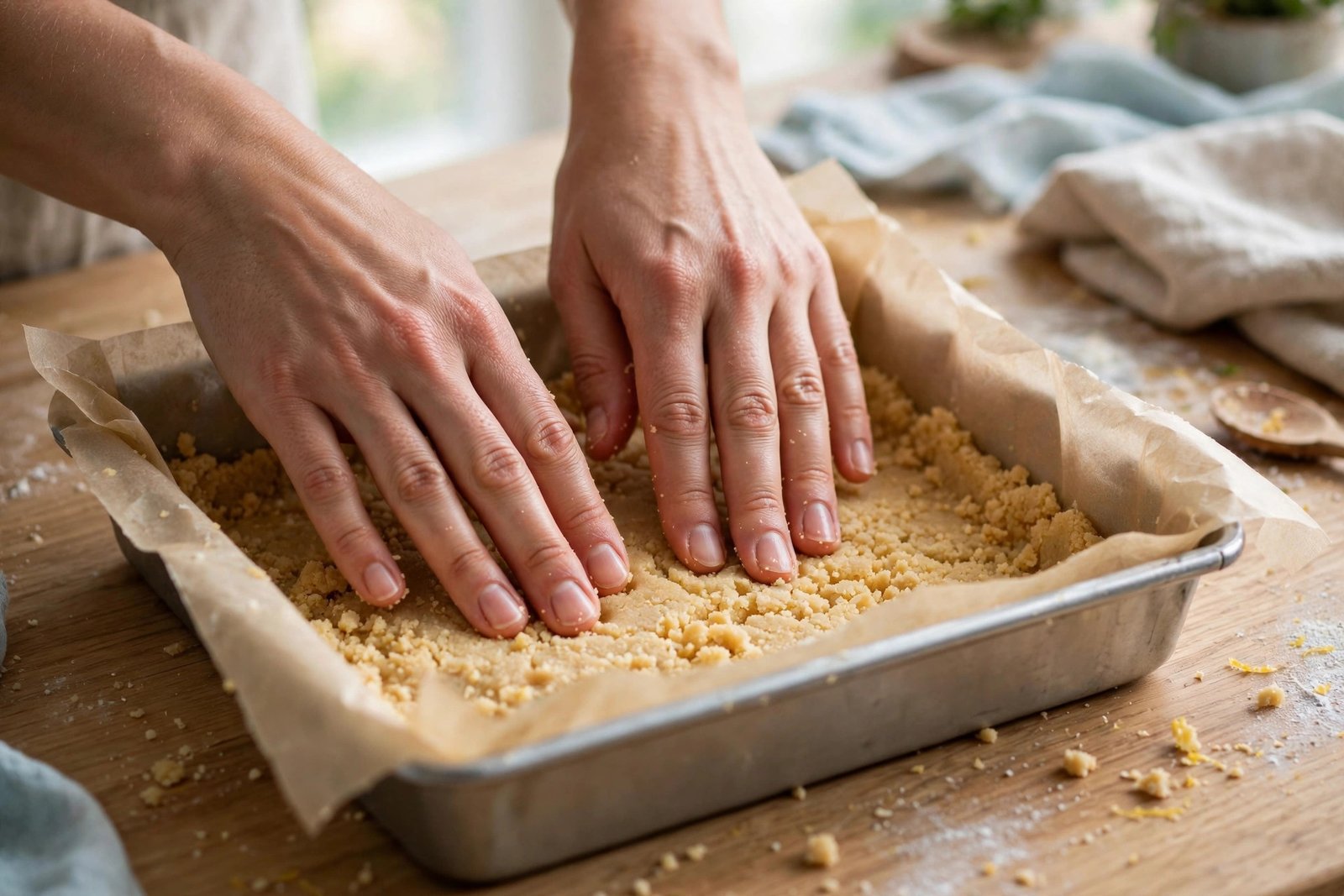
Oven. First. Before anything, before the butter even thinks about coming out of the fridge — 350°F (175°C) — because I have stood there, I have genuinely stood there, holding a finished crust and staring into a stone-cold oven like it had personally betrayed me. It had not. I had. Anyway. While it warms up: pan. 8×8-inch, parchment in it, and let the paper hang over on two sides, proper flaps, don’t trim them down all neat, those flaps are the handles you lift the whole slab out with later — bars you’ve had to dig out with a knife are bars with casualties, I have buried some. Right. Bowl. Flour, sugar, salt, whisk whisk whisk, and then the butter, cold, cubed, straight from the fridge, rubbed in with your fingertips — pastry blender if you’re feeling proper, obviously I’m not, fingertips, it’s always fingertips — rub and rub until the whole bowl looks like… sand. Damp sand. Coarse damp sand with a few stubborn pea-sized lumps sulking in it. That’s the look. That’s exactly the look. Vanilla goes in last, and yes the mixture will be crumbly and dry-looking and all up under your nails, and no, you haven’t broken it — it is MEANT to look like that, it’s shortbread before it’s shortbread.
Now pressing it in, and this — this is the bit everybody rushes, I rushed it, you will want to rush it, don’t. Tip the whole crumbly mess into the pan and press it down firm, flat, even, with the bottom of a measuring cup, and push it right into the corners, especially the corners, corners are where it goes thin and sulky and betrays you later. Because an uneven crust is — hand on heart — the number one reason one end of the pan comes out perfect and the other end comes out a cracker. A cracker. My first pan, one whole side you could knock on. Knock knock. Like a door. We ate it anyway, obviously, we’re not animals, but I thought about it with every single bite.
Step 2: Par-Bake — This Is Where Crisp Comes From
In it goes, alone, no filling, nothing on top, just crust, 18 to 20 minutes, until the edges start going golden at the rim and the top looks flat and matte and set, not shiny. Timer. Use the timer. Set it on the oven, set it on your phone, set both, I don’t care, set a third one in another room — because I trusted my memory once, one single time, and my memory, it turned out, was busy elsewhere, doing whatever memories do when they’re off duty, and I wandered back into the kitchen to a crust the colour of toast all the way through. Toast. It still got eaten — everything in this house gets eaten — but it was not a lemon bar base, it was a biscuit situation.
And the why — because I skipped this step for years, years, thinking it was decoration, chef-y fuss, something for people with their names embroidered on their aprons — it is not decoration. Think about what’s actually in that curd. It’s lemony water. And eggs. That’s… that’s basically the whole list. And raw dough? Raw dough is thirsty, unbelievably thirsty, you pour something wet over raw dough and it just — drinks. Sucks the whole lot down into itself before the oven has had five minutes to set anything, and what you drag out at the end is that pale, sad, soggy bottom everybody photographs and then blames on the recipe, on the flour, on the phase of the moon. It wasn’t the recipe. It was the thirst. That lonely little first bake, that’s the whole fix: the heat chases the wet OUT of the crumb and the butter and the flour sort of lock arms and set into something solid, a floor, a finished floor — not a sponge with ambitions — and when the curd finally lands it has no choice, none, but to sit up on top of it behaving itself, instead of sinking in and moving in rent-free. Twenty minutes. Same ingredients, same pan, same lemons. Somehow not even the same dessert.
Step 3: The Curd — Whisk, Don’t Beat
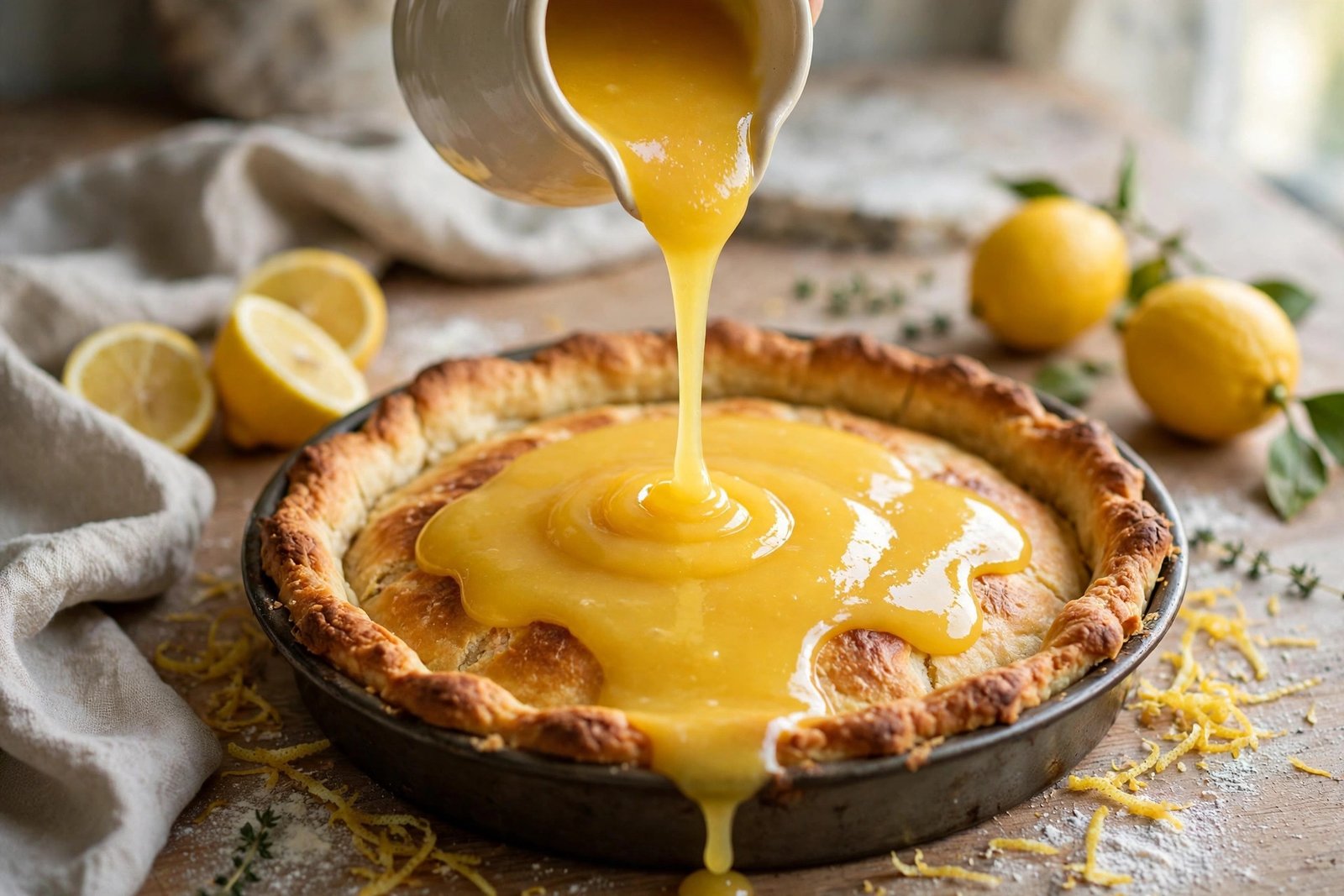
Crust’s in, clock’s running, so the curd gets built in that window and not a minute before it has to — eggs and sugar into a bowl, whisked by hand, and I mean just until it comes together and looks smooth-ish, then stop, put the whisk down, you’ve done enough; lemon juice sloshed in, zest, the salt, and only at the very end the flour and baking powder, and then one more slow go-round because there is ALWAYS a pale streak sulking at the bottom of the bowl pretending it was mixed, it was not mixed, scrape, check, it’s there. It’ll look thin and a bit nothing-y, this yellow puddle — good, that’s the look, curd is a puddle that the oven promotes, and if your arm’s feeling efficient you can pour it through a fine sieve into a jug on its way to the pan, catches the zest clumps and any chalaza stringy bits, I do it when I can find the sieve, which, keep reading, is not always.
And the rule I say out loud in my kitchen: whisk, don’t beat. Beating whips in air, and air rises into a foamy meringue-ish layer on top that cracks and peels — did it once with the electric mixer because my arm was tired, regretted it before the pan came out. Over-whisked anyway? Don’t throw it out: let the bowl sit 5 minutes, skim the foam off with a spoon, problem deleted.
That 1/4 cup of flour in the filling, quickly: classic bars set on egg alone, and plenty of gluten free bakers get nervous trusting an egg-only set, reasonably, so that flour plus the baking powder is insurance — a clean, sliceable set, zero gumminess. Provided you don’t double it. Double it and you’ve made lemon cake, different dessert, different article.
Step 4: Hot Curd on Hot Crust — Timing Is the Trick
Right, this step — move. No wandering off, no answering the door, no ‘I’ll just quickly’ anything, because this, THIS, is the one I got wrong for… a year? Easily a year. Probably more, I’m being kind to myself. Because every instinct in your body says let the crust cool down a bit first, be sensible, don’t rush the poor thing — wrong. Ignore that instinct. Sensible is what slid my filling clean off in a sheet, a whole sheet, like a lemon omelette leaving a crime scene. The second — the SECOND — that crust comes out of the oven, the curd goes over it. Both hot. No pause, no cooling-rack intermission, no one last enthusiastic whisk either (you’ll want to, put the whisk DOWN), one gentle stir, and pour, steady, all over, right into the corners. And hot on hot isn’t a slogan, it’s not a cute phrase for a tea towel, it’s just what physically happens in that pan: the heat sitting in the crust grabs the bottom of the curd the instant it lands and starts cooking it right there, at the border, at the seam, so the two set INTO each other, gripping, holding on — instead of two strangers sharing a pan and quietly planning separate lives.
Pour it onto a cold crust, though? A crust you let sit there cooling while you did other things, while you were being sensible? Those layers never meet properly. They stay strangers. And the filling knows it — you go to cut the bars and it slides, clean off, in one piece, like it was never actually invited and had worked that out and was leaving. You’ve seen those bars. Curd in one piece. Crust in another. A divorce in a baking pan. This — thirty seconds of paying attention, that’s all it costs, thirty seconds — this is how you never serve one of those.
Straight back in it goes — no resting on the counter admiring itself — 20 to 24 minutes more, and in that stretch you watch the pan, not the clock, the clock is a liar in every kitchen I’ve ever stood in. Done looks like this: you nudge the pan, gently, oven glove on, and the middle shivers, just, like set jelly deciding whether to hold — a shiver, not a slosh, if it sloshes it’s not done, and the edges will have gone matte and quiet. Pull it while it still looks ever so slightly under, honestly slightly, because it isn’t finished, it keeps firming up the whole way down to room temperature, the middle setting as the heat leaves it — whereas genuinely early is slicing soup, I’ve served the soup, and five minutes too far the other way and it goes rubbery and sulks and cracks across the top. The shiver. Put your trust in the shiver, not the timer.
Cooling: The Step Everyone Skips and Regrets
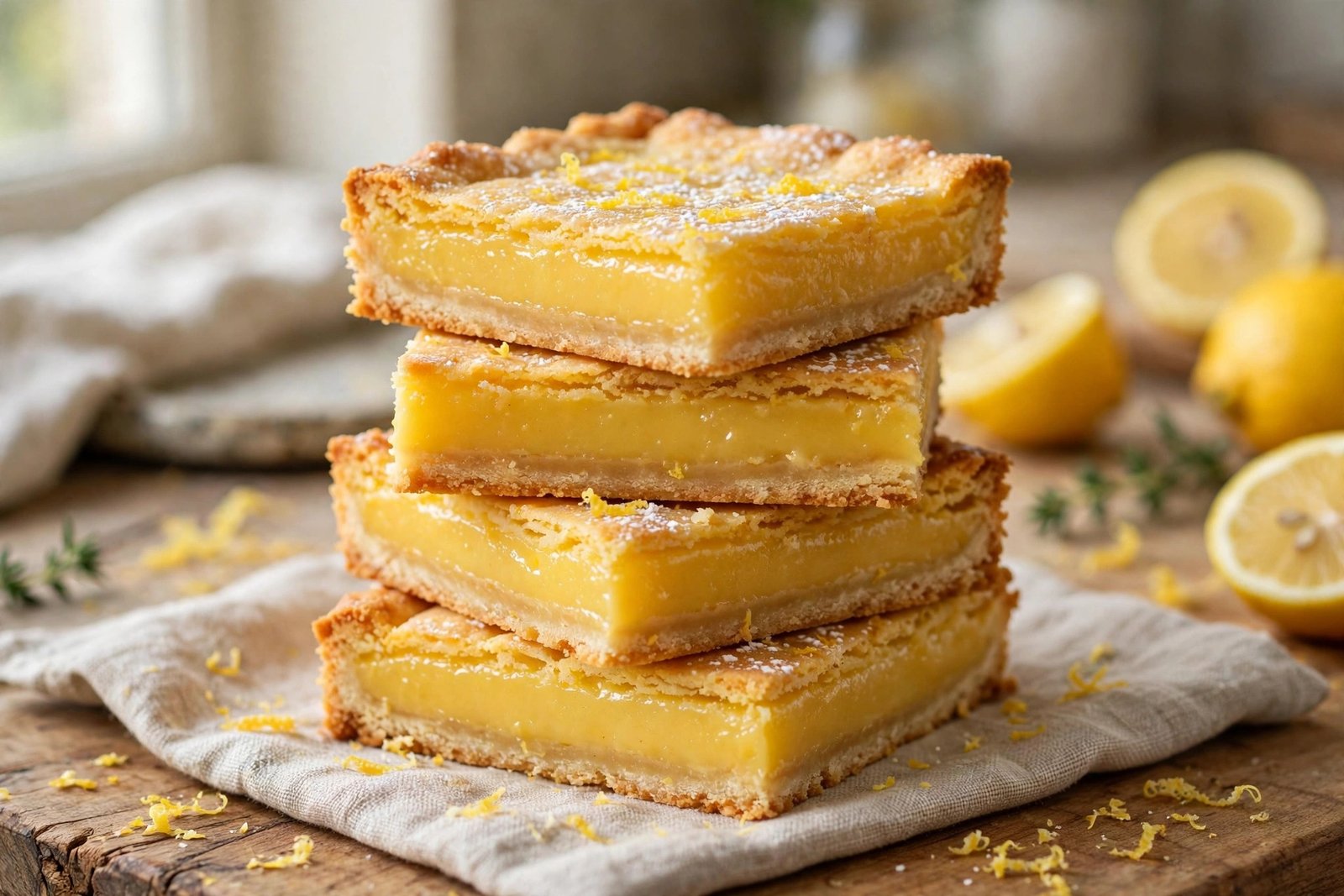
Then the pan just sits there on a rack, a full hour, a FULL one, not twenty minutes and a hopeful poke with a fingertip, I know the poke, I invented the poke — and I use that hour exactly the way you’d expect, wiping counters that are already clean, losing the sieve somewhere between the sink and the cupboard (behind the flour, it was behind the flour), finding the sieve, making a cup of tea I then forget on the counter. After the hour, fridge, at least 2 hours in there before any knife goes anywhere near it, and the cold isn’t just waiting, it’s doing the last of the work — the curd finally firms up properly all the way through and the butter in the crust goes solid again, re-sets, whatever the proper word is, and THAT, that firming, is the entire difference between squares with clean bakery-window edges and a lemony smear on a plate.
Cut with a long knife, wiping the blade between cuts, every cut — it’s the difference between neat squares and a crime scene. And powdered sugar goes on ONLY right before serving: hours ahead it dissolves into sad little wet spots — don’t ask about my first bake-sale batch, actually no, do, picture it: me in the parking lot, tray on the car bonnet, re-dusting the whole thing out of the tin by hand, dignity nowhere to be found. It looked fine in the end. Nobody knew. Now you know. Dust late.
Storage
Whatever survives — with my nephew visiting, very little survives — keeps in the fridge up to 4 days, single layer if you can, or parchment between layers so they don’t weld together. They freeze weirdly well too: wrap individually, freeze up to 2 months, thaw in the fridge, and yes the crust softens slightly, I won’t pretend it doesn’t. Still beats everything else in that freezer, at 9pm especially.
Quick Troubleshooting
Curd cracked on top? Heat. It’s heat, it’s nearly always heat — the oven ran hotter than it claimed it was running, or the pan stayed in too long, or the classic double, both at once, congratulations. And before you blame the eggs, or the lemons, or me: get an oven thermometer. They cost basically nothing and they end the guessing forever — mine informed me, very politely, that my oven simply runs hot, as a personality trait, and three solid years of baking mysteries suddenly made sense in about four seconds.
Filling slid off the crust? The crust was cold when the curd went on, that’s it, that’s the whole diagnosis. Hot on hot, every time, even if the doorbell goes.
Too tart / too sweet? Lemons vary more than any recipe admits — some are gentle, some take the enamel off your teeth — so taste your juice first. If it’s face-melting, pull the sugar up by 2 tablespoons next round and write it in pen. Your lemons, your call.
