
Some nights call for a bowl of noodles, a hot savory broth, and something filling on top. This is the kind of meal I make when I want all three without spending ages in the kitchen.
This gluten free ramen has a little bit of everything: tender noodles, thinly sliced steak, mushrooms, crisp-tender vegetables and a soft-boiled egg sitting in a garlicky, gingery broth. A drizzle of sesame oil brings everything together.
The best part is that the whole thing moves quickly. While the noodles and eggs are cooking, I get the steak and vegetables going, then the broth comes together in the same pan. By the time everything is ready, dinner is basically waiting to be assembled.
And you don’t have to stick with steak. This is one of those recipes that can change depending on what’s in your fridge.
Why I Keep Coming Back to This Ramen
There are plenty of reasons this has become a handy weeknight meal in my kitchen, but these are the ones that matter most:
- It is genuinely quick. Most of the cooking happens at the same time, so you can have dinner ready in around 15 minutes.
- The broth does a lot of the work. Garlic, ginger, sesame oil, tamari and good stock give it plenty of savory flavor without needing a long cooking time.
- You can change the protein. Steak is my favorite here, but chicken, prawns, tofu and pork all work.
- It is an easy fridge-cleanout meal. A handful of mushrooms, some greens or a lonely carrot can all go into the pot.
- The soft egg makes it feel like ramen. Cut it open over the bowl and that slightly creamy center mixes into the hot broth.
Most importantly, it doesn’t feel like you’re eating a “special diet” version of ramen. It’s simply a good bowl of noodles that happens to be gluten free.
What You’ll Need
You don’t need anything complicated for this recipe. A wok or large frying pan, a couple of saucepans and your serving bowls are enough.
Gluten Free Ramen Noodles
The noodles are the one ingredient I wouldn’t replace without checking the label first.
Traditional ramen noodles are generally made with wheat, so look specifically for gluten free ramen noodles. Rice-based ramen-style noodles work particularly well because they hold their shape better than some thinner rice noodles.
Different brands can cook at slightly different speeds, so use the packet directions as a starting point and avoid leaving them sitting in hot water once they’re tender.
Steak
Thin-cut sirloin is ideal because it cooks in minutes. I like to sear it quickly, let it rest, and then slice it into narrow strips before adding it to the bowl.
You can easily switch it for:
- Chicken breast or thigh
- Prawns
- Thinly sliced pork
- Firm tofu
- Extra mushrooms for a meat-free bowl
There’s no need to overcomplicate this part. Use what you enjoy.
Mushrooms and Vegetables
The combination of shiitake mushrooms, carrot and pak choi gives the bowl a nice mix of textures. The mushrooms add a deeper savory taste, while the carrot stays slightly crisp and the pak choi becomes tender in the broth.
But don’t feel tied to those three.
Good swaps include:
- Baby spinach
- Thinly sliced cabbage
- Baby corn
- Mange tout
- Kale
- Extra mushrooms
- Spring greens
If you’re using vegetables that take longer to soften, slice them thinly so they cook in the same short window.
Garlic and Ginger
This is where the broth starts to smell like ramen rather than just a bowl of noodles with stock.
Fresh minced garlic and ginger are excellent, but I often use paste when I’m cooking on a busy evening. Either works. What matters is giving them a little time in the sesame oil before the stock goes in.
Tamari
Tamari gives the broth its salty, savory backbone and is a useful alternative to regular soy sauce when making a gluten free ramen.
Don’t just assume every soy-style sauce is gluten free, though. Check the label, particularly if you’re cooking for someone with celiac disease or a strict gluten-free requirement.
Chicken Stock
Chicken stock makes up most of the broth, so choose a gluten free stock with a flavor you like.
You can also use:
- Vegetable stock for a vegetarian version
- Beef stock for a deeper flavor, especially with steak
- Chicken stock for the lighter original version
Getting Everything Ready
This recipe is fast enough that a little preparation beforehand makes the cooking much easier.
Before turning on the stove, I like to have:
- The steak ready to cook.
- The vegetables sliced.
- Garlic and ginger measured.
- Stock warmed or ready beside the stove.
- Serving bowls nearby.
That might sound like a small thing, but once the wok is hot, the vegetables and aromatics don’t need much time.
Cook the Noodles Separately
Bring a pan of water to a boil and cook the gluten free ramen noodles according to the packet directions, usually around 5–6 minutes.
Once they’re tender, drain them well and give them a quick rinse with cold water. Set them aside while you make the broth.
I prefer doing this separately because the noodles stay easier to manage and don’t have a chance to turn soft while the rest of the meal is cooking.
Make the Soft-Boiled Eggs
Bring another small saucepan of water to a boil. Carefully lower in the eggs and cook for about 8 minutes.
Move them straight into ice-cold water when they’re done.
This stops them from continuing to cook and gives you a much nicer center. Once they’re cool enough to handle, peel them and leave them ready for the final assembly.
Build the Flavor in the Wok
Now comes the quick part.
Heat half of the sesame oil in a large wok or frying pan over high heat. Add the steak and cook it briefly on both sides. For a medium-rare center, around a minute per side is enough for a thin steak, although the exact time will depend on its thickness.
Transfer it to a board and let it rest.
Add the remaining sesame oil to the same pan. This is where all those browned bits left behind by the steak become useful.
Add the garlic and ginger, followed by the mushrooms, carrot, pak choi and tamari. Stir everything together for a couple of minutes, just until the vegetables begin to soften.
Pour in the hot stock.
Give everything a good stir, bring the broth to a gentle simmer and let the vegetables finish cooking in it.
The smell at this point is usually the sign that dinner is very close.
One Small Detail That Makes the Bowl Better
Don’t slice the steak immediately after taking it off the heat.
Give it a few minutes to rest first.
Then cut it thinly across the grain. You’ll get much more tender pieces, and those slices will sit nicely on top of the noodles instead of disappearing into the broth.
For the final bowl, I like to keep the components visible rather than stirring everything together:
Noodles → hot broth and vegetables → sliced steak → halved egg → toppings
A few sesame seeds, chopped spring onions, coriander or a little gluten free chili oil are all good finishing touches.
The ramen is best served straight away, while the noodles are still springy and the broth is properly hot.
How to Finish the Gluten Free Ramen
Once the broth is simmering and the vegetables are just tender, you’re basically at the finish line. This is where I like to taste the broth before assembling the bowls. If it needs a little more saltiness, add a small splash of tamari. If the flavor feels too strong, a little extra stock will soften it.
Don’t add all the noodles to the wok at this stage. Keep them separate until you’re ready to serve. Gluten free noodles can become soft surprisingly quickly when they sit in hot liquid.
Put the Bowls Together
I find ramen looks best when you build each bowl rather than mixing everything together in the pan.
Start with an even layer of noodles in each bowl. Ladle the hot broth over them, making sure every bowl gets a good amount of vegetables and mushrooms.
Then arrange the steak slices on top and tuck in the halved egg.
Finish with whatever you have on hand. My usual combination is chopped spring onion, sesame seeds and a little chili oil, but fresh coriander is lovely too.
My Favorite Toppings
You can keep the toppings simple or make the bowls more substantial:
- Toasted sesame seeds
- Sliced spring onions
- Fresh coriander
- Gluten free chili oil
- Thinly sliced fresh chili
- Nori strips
- A few extra mushrooms
There’s no need to use all of them. Even a little spring onion and sesame is enough to make the finished bowl look and taste great.
A Few Easy Swaps
One of the reasons I like this recipe is that the broth works with more than one combination of ingredients.
Chicken Ramen
Use thinly sliced chicken instead of steak and cook it completely before removing it from the pan. Chicken thighs are particularly good because they stay juicy in a quick-cooking recipe.
Prawn Ramen
Prawns need very little time. Add them toward the end of cooking the vegetables and cook until they turn opaque and are cooked through.
Tofu Ramen
For a meat-free bowl, use firm tofu. I like to cut it into small cubes and brown it in the sesame oil before cooking the vegetables. It gives the tofu a little color and makes it much more interesting than simply dropping it into the broth.
Vegetable Ramen
You can leave out the protein altogether and add another handful of mushrooms, greens or other vegetables. Use gluten free vegetable stock for the broth.
Can You Prepare It Ahead?
Yes, but I wouldn’t assemble the complete ramen hours in advance.
The noodles are much better when they’re kept away from the broth until you’re ready to eat. Otherwise, they continue absorbing liquid and can lose that pleasant bite.
If I’m preparing this ahead, I keep the components separate:
Cooked noodles: Toss them with a tiny amount of sesame oil so they don’t stick together, then refrigerate them in a covered container.
Broth and vegetables: Store these separately and refrigerate once cooled.
Steak and eggs: Keep the cooked protein separate as well.
When you’re ready for dinner, heat the broth and vegetables until properly hot, then add the noodles just long enough to warm them through. Add the steak and egg when serving.
This little bit of extra organization makes leftover ramen much better than storing the whole bowl together.
What About Freezing?
The broth itself freezes quite well, so if you’ve made more than you need, there’s no reason to throw it away.
I wouldn’t freeze the finished ramen, though. The noodles can become soft and unpleasant after thawing and reheating.
Instead, freeze only the broth and vegetables in a suitable freezer container. Once you’re ready to use it, thaw it safely, reheat it thoroughly, and cook a fresh batch of noodles.
That way, the part of the meal that freezes well is saved, while the noodles still have the right texture.
Common Questions
Is ramen naturally gluten free?
Traditional ramen usually isn’t gluten free because the noodles are commonly made from wheat, and regular soy sauce can also contain wheat.
This version uses gluten free ramen noodles and tamari, but it’s still important to check the packaging of every packaged ingredient you’re using.
If you’re cooking for someone with celiac disease, don’t rely only on the words “rice noodles” or “soy sauce alternative.” Look for a clear gluten-free label and check for cross-contact information where appropriate.
Can I make this ramen without steak?
Absolutely. Steak is just one option.
Chicken, prawns, tofu and pork can all work nicely. You can even skip the protein and add extra vegetables and mushrooms for a lighter bowl.
Can I use regular soy sauce?
If you need the recipe to remain gluten free, use gluten free tamari or another clearly labeled gluten-free soy sauce alternative rather than ordinary soy sauce.
Regular soy sauce is often made with wheat, so it’s not a safe swap for a strict gluten-free recipe.
Can the ramen be made vegan?
Yes. Replace the chicken stock with gluten free vegetable stock and use tofu or another plant-based protein instead of steak and egg.
You’ll end up with a completely different bowl, but the garlic, ginger, sesame and tamari broth still gives it plenty of character.
Make the Bowl Your Own
Once you’ve made this ramen once, there’s really no reason to make it exactly the same way every time.
Use the vegetables you already have. Change the protein. Add chili if you like heat or keep the broth mild for a simpler bowl.
The important things are the gluten free noodles, flavorful broth and good timing. Keep the noodles separate until serving, don’t overcook the vegetables, and give the steak a short rest before slicing.
That’s really all it takes to turn a few everyday ingredients into a bowl that feels like a proper dinner.
And if you’re making it for the first time, I’d keep the toppings simple. Get the broth and noodles right first, then start experimenting with everything else on your next bowl.
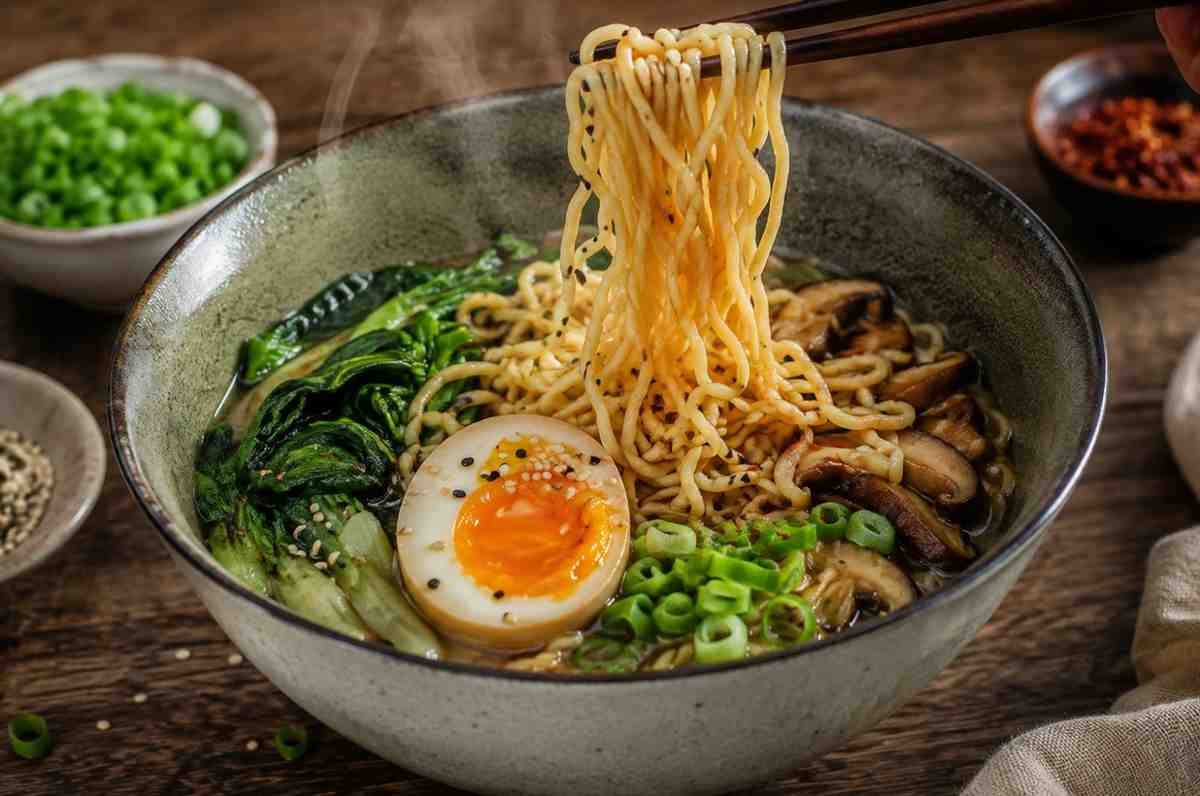
Gluten Free Ramen
Ingredients
Method
Cook the noodles
Bring a saucepan of water to a boil. Cook the gluten free ramen noodles according to the package directions, usually around 5–6 minutes, until tender. Drain well and rinse briefly under cold water. Set aside.Prepare the eggs
Bring a small saucepan of water to a boil. Carefully add the eggs and cook for about 8 minutes. Transfer them immediately to ice-cold water. Once cool enough to handle, peel and halve them.Sear the steak
Heat 1 teaspoon of sesame oil in a large wok or frying pan over high heat.Add the steak and cook for about 1 minute on each side for a medium-rare result, adjusting the time according to thickness and your preferred doneness.Transfer the steak to a board and let it rest for a few minutes before slicing.Cook the vegetables
Add the remaining sesame oil to the same pan. Stir in the garlic and ginger, followed by the mushrooms, carrot, pak choi, spring onions and tamari. Cook for 2–3 minutes, stirring regularly, until the vegetables begin to soften but still have some texture.Make the broth
Pour the hot chicken stock into the pan with the vegetables. Stir well, scrape up any flavorful bits from the bottom and bring everything to a gentle simmer. Taste the broth and add a little extra tamari if needed.Assemble the bowls
Divide the cooked noodles between two serving bowls. Ladle the hot broth and vegetables over the noodles, making sure the vegetables are divided evenly. Slice the rested steak into thin strips and arrange it over the noodles. Add the halved eggs. Finish with your choice of sesame seeds, spring onions, coriander, chili oil or nori. Serve immediately while the broth is hot and the noodles are still firm.
Notes
- Keep the noodles separate: If you’re preparing the ramen ahead, store the cooked noodles separately from the broth so they don’t become soft.
- Protein swaps: Chicken, prawns, tofu or pork can replace the steak.
- Vegetable swaps: Spinach, cabbage, kale, baby corn and mange tout can all be used in place of some or all of the vegetables.
- Gluten free check: Use products specifically labeled gluten free for the noodles, tamari and stock, particularly when cooking for someone with celiac disease.
- Make-ahead: Refrigerate the noodles, broth, vegetables and protein separately, then reheat the broth and add the noodles just before serving.
- Freezing: The broth and vegetables can be frozen, but the finished ramen is best made fresh because the noodles can become mushy after freezing and reheating.
- Vegan option: Use gluten free vegetable stock and replace the steak and egg with tofu or another plant-based protein.
