
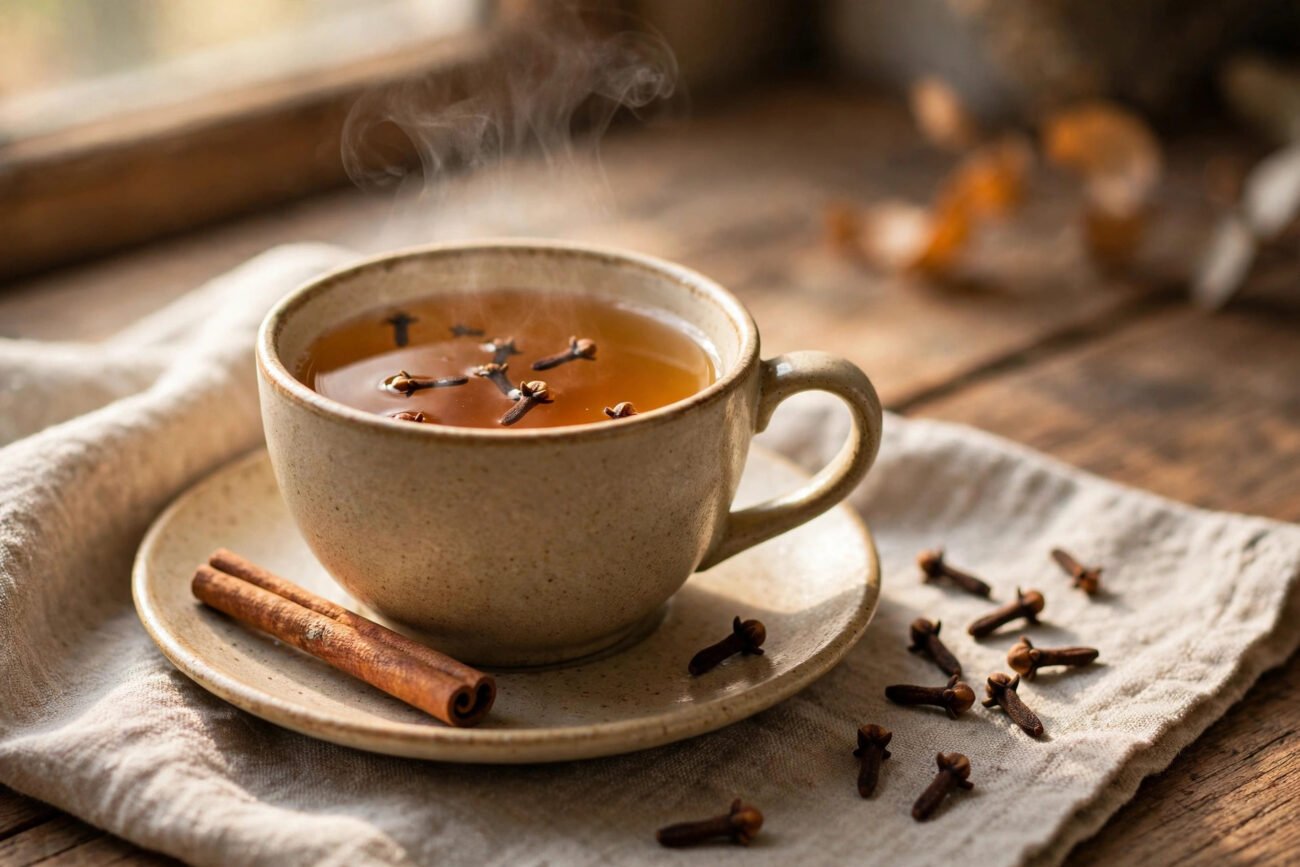
Intro — Where This Drink Comes From in My House
Right, so — clove tea, then. Which, honestly, smells like it should be complicated, doesn’t it, like there must be some secret to it, some hidden step nobody’s telling you about, because surely no drink that smells that good is just cloves and hot water. Except it is. Cloves, hot water, and whatever else you feel like throwing in. That’s the whole secret. Warm, sweet, a bit like a bakery in the middle of winter, and everyone assumes you’ve done something clever.
My grandmother started this. Whenever the house felt cold and everybody was tired and sorry for themselves, out came the cloves, and she’d make a pot like it was the obvious answer to everything. Can’t promise it fixed any of it. But it became my evening drink in winter, the one I make when coffee is a bad idea (too late, I’d be staring at the ceiling) and plain water is just a boring one. My husband now asks for it by description — “that clove thing” — which I’ve decided counts as a review.
The first time I made it on my own, I used ground cloves because that’s what was in the cupboard — far, far too many of them, because if a little is good then a lot must be better, right? Wrong. It came out bitter and harsh, like drinking a potpourri. Whole cloves, gently simmered — that’s the way, and there’s no way round it. Ground clove is too strong and makes the tea cloudy. Whole. Always whole.
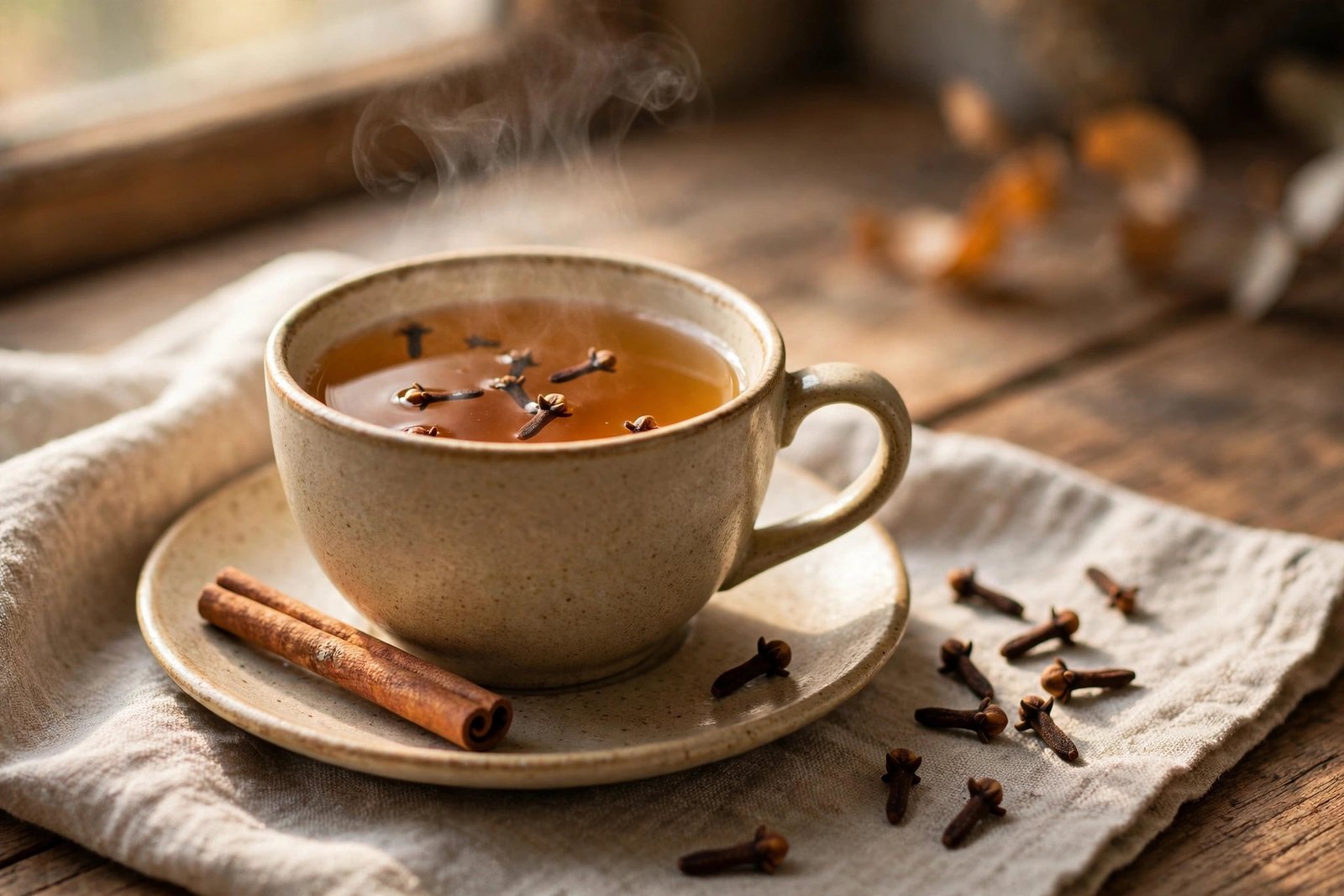
Why You’ll Love This Recipe
It costs almost nothing, for a start. Cloves are one of those spices where one small bag lasts for ages, and a cup of this works out to pennies. And it’s completely caffeine-free, which makes it a proper evening drink — the kind you can have late and still sleep like a normal person.
And it’s flexible in a way most teas just aren’t. Throw cinnamon and ginger in and it turns into a proper warming winter cup, the kind you wrap both hands round and don’t put down; a strip of orange peel instead and suddenly it’s festive, practically showing off; leave it plain with just a drop of honey and it goes gentle and quiet on you — same pot, different moods, depending on the day you’ve had. And cloves have been sitting in traditional home remedies for generations, though let’s be clear, this is a tea, not medicine, don’t let me get carried away — but a hot, spiced cup on a cold evening does general comfort very, very well, whatever you want to call it.
Ingredients
Makes 2 cups.
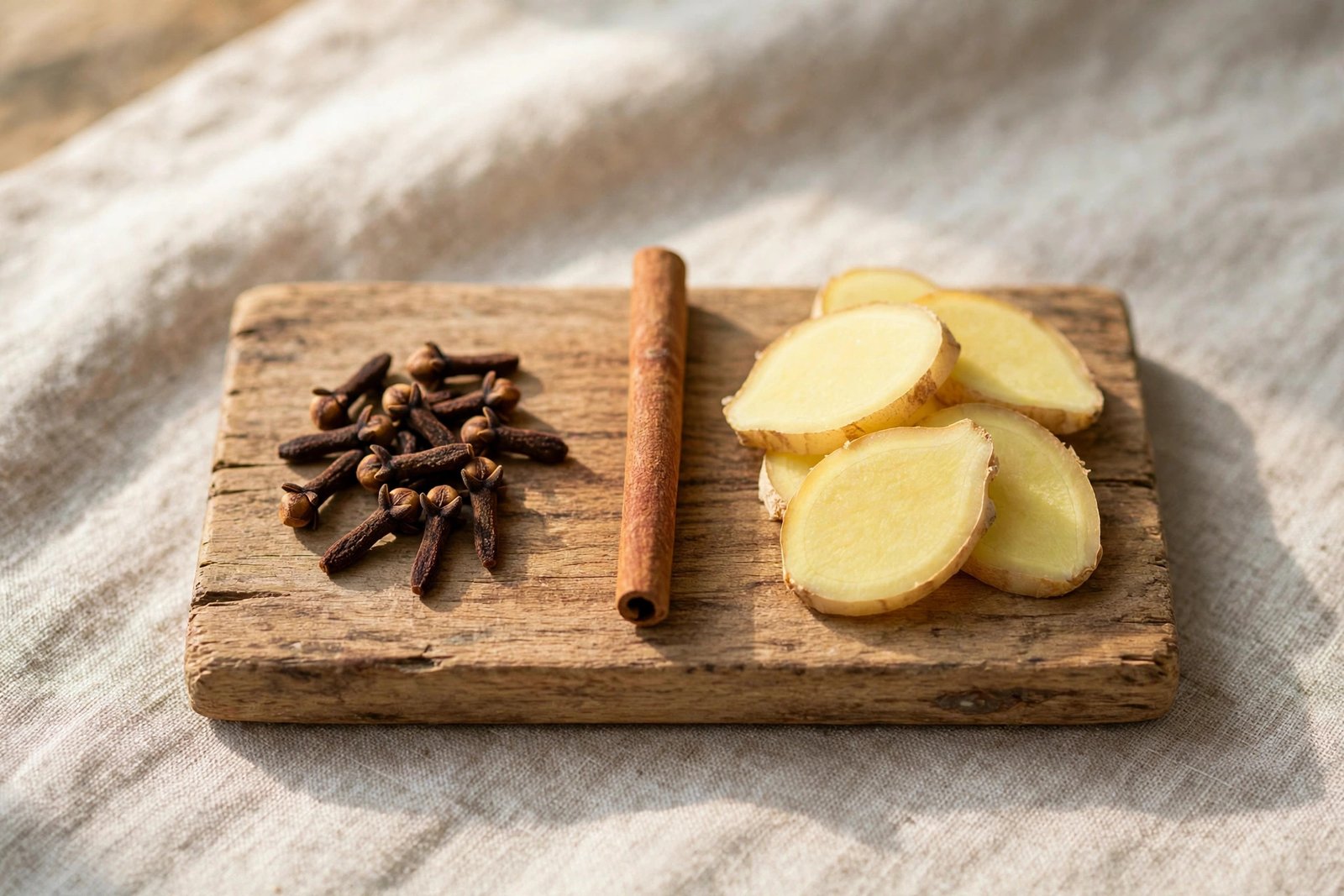
- 2 cups water (475 ml) — just ordinary tap water, nothing fancy
- 1 teaspoon whole cloves (about 8 to 10 whole cloves) — whole ones, yes, I will keep saying that
- 1 small cinnamon stick (optional) — optional on paper, though it’s the version I make most
- 2 to 3 thin slices of fresh ginger (optional) — for when you want a bit of warmth running through it
- 1 to 2 teaspoons honey, to taste (or sugar) — I stop at one, my husband goes to two, we’ve agreed to disagree
- 1 teaspoon fresh lemon juice (optional) — this goes in right at the end, not a second before
Quick note on the cloves, because it matters: whole cloves should look plump and a bit oily, and if you press one with a thumbnail it should give off a strong, sweet smell. Old, dusty cloves that smell like nothing will make a tea that tastes like nothing. If yours have been open since before you can remember — be honest — replace them.
Step-by-Step Instructions — It’s Mostly Just Waiting, Honestly
- So it starts — and this is the bit that feels wrong the first time, it felt wrong to me — with everything going into cold water: small saucepan, water in, then the cloves, plus the cinnamon stick and the ginger if you’re using them, all of it, cold, before any heat gets anywhere near it. I know, I know. But starting the spices cold draws the flavour out more evenly than dropping them into water that’s already boiling — they warm up together, pan and spices, and by the time it’s properly hot the whole thing already smells like something. Cold water, everything in, then the heat. Trust it, even while your instincts are shouting at you.
- Bring it up to a gentle boil over medium heat — and I do mean gentle, not some violent rolling boil trying to climb out of the pan, just up to the point where it’s properly bubbling.
- Then turn the heat right down and let it simmer gently for 8 to 10 minutes — this is the part where the whole kitchen starts smelling like winter. The water turns a light amber colour; looks like weak tea, smells like anything but. One warning, from experience: much longer than 12 minutes and it can start to taste harsh, so set a timer if you’re likely to wander off. I am always likely to wander off.
- Pan off the heat, lid on, and let it steep for another 5 minutes, just sitting there in its own steam. This off-heat steep rounds the flavour out — noticeably smoother — and it’s the step everyone wants to skip because it looks like nothing is happening. Something is happening. Just wait.
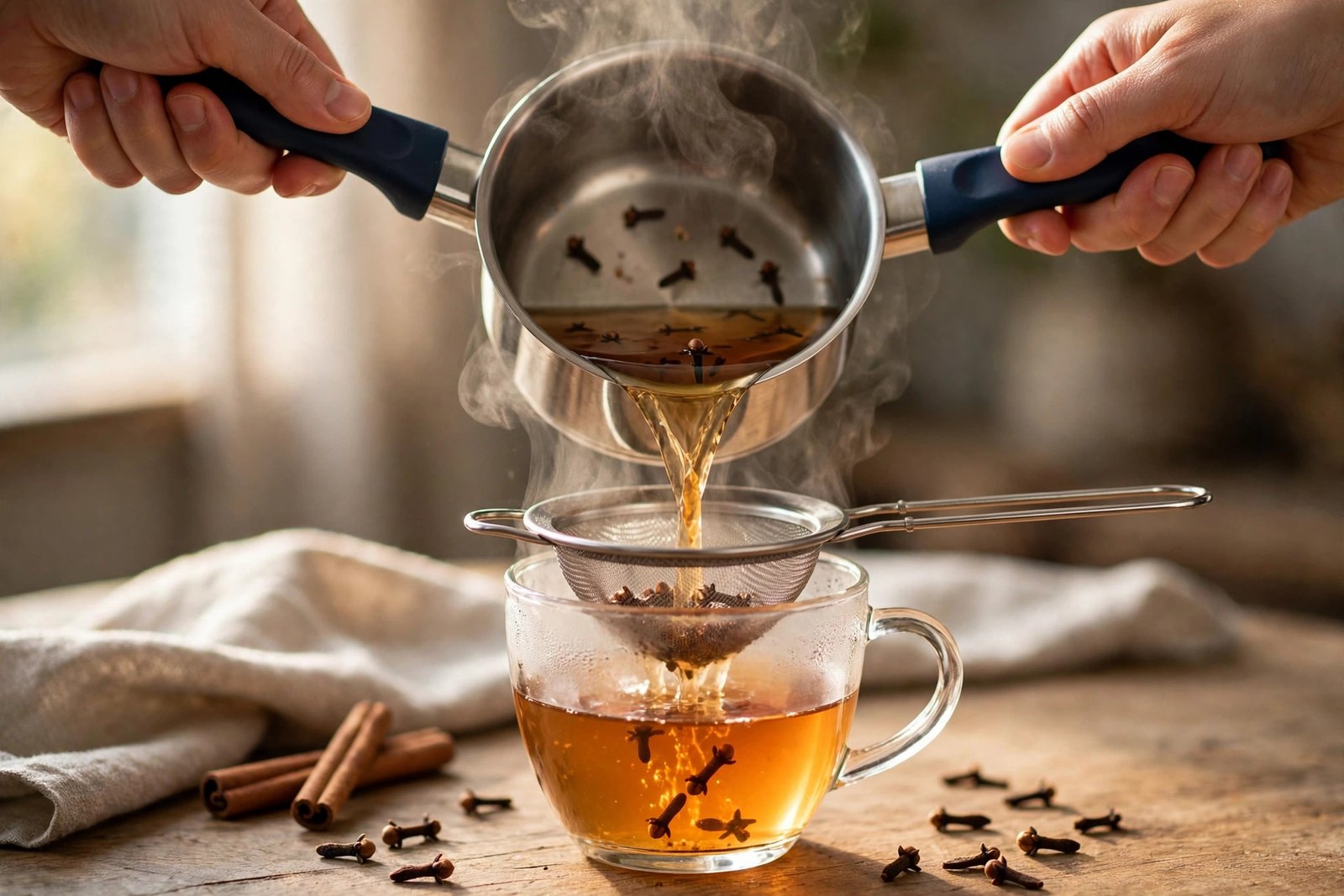
- Strain it through a small sieve into cups or a teapot. The cloves have done their job, and you really don’t want one of them floating into somebody’s mouth halfway through a sip — which has happened at my table exactly once and is still talked about.
- Then the honey, stirred in to taste, and the lemon juice if you’re using it — lemon at the end, off the heat, so it stays bright instead of going dull and cooked-tasting. Then drink it hot, both hands around the cup, preferably sitting down. That’s the whole point of the exercise.
Tips / Common Mistakes
- Whole cloves, always — ground clove makes the tea bitter, cloudy and way too strong, and there is no fixing it afterwards. No amount of honey rescues it; you just have to tip it away and start again.
- Don’t boil it hard for ages, which is the beginner move (it was absolutely my move) — a gentle simmer and a covered steep gives a smoother cup than twenty minutes of hard boiling ever will.
- If the tea tastes weak, don’t panic and don’t go doubling everything — your cloves are probably just old. Bump the simmer up to a full 10 minutes next time — give tired old cloves longer to say what they have to say — and buy fresh ones when you can, because no technique in the world rescues a clove that’s been asleep in the cupboard since forever.
Variations & Substitutions — Same Cloves, Slightly Different Directions
Clove and cinnamon is the classic, really — it’s already in the recipe as an option, cinnamon in, ginger left out, and what you get is a sweeter, softer cup, less of an edge on it. It’s the one I make when my grandmother visits, because it’s closest to hers, and she notices these things, believe me, there is no slipping a shortcut past that woman.
Iced clove tea: sounds wrong, works anyway. Make it double strength (same cloves, half the water), strain it, cool it, then pour it over ice and top up with cold water and a squeeze of lemon. Actually very refreshing, despite cloves being a “winter” spice in most people’s heads.
Serving Suggestions
Serve it in the evening, after dinner, when it does the job of dessert without being dessert — especially the cinnamon version. It goes well with plain biscuits, shortbread, a slice of fruit cake — nothing fancy, nothing that shouts over it — and if you’re serving it to guests, drop a cinnamon stick in each cup, because it makes the whole thing look far more deliberate, far more planned-out, than the ten minutes it actually took, which is a ratio I’m very fond of.

Storage & Reheating — If Any of It Survives the Evening
If there’s any left — there isn’t always — it keeps in a covered jug or a bottle in the fridge for up to 2 days, and yes, it loses a little of its punch, some of that top-note sparkle, but it stays perfectly drinkable, nobody’s pouring it away. To reheat it, warm it gently in a saucepan until it’s steaming and no further — do not, whatever you do, boil it again, because a second boil turns it harsh and a bit cross-tasting. And freezing? I don’t recommend it; the flavour dulls right down, and honestly it’s so quick to make fresh that freezing feels like a lot of effort spent to save no effort at all.
FAQs — The Questions Everybody Asks Over the Cup
How many cloves should I use for one cup of tea? — the first thing everyone asks
About 4 to 5 whole cloves per cup of water — that’s the sweet spot I’ve landed on, enough for a clear, warm flavour that actually tastes of something, without it tipping over into bitterness, which it will, and quickly, if you get generous and start throwing them in by the handful.
Does clove tea have caffeine?
No — cloves and water are naturally caffeine-free, there’s nothing hiding in there, no secret stimulant lurking at the bottom of the cup. The only way caffeine gets in at all is if you deliberately put it there, choosing to include a black tea bag the way the chai-style variation above does — and at that point it’s your doing, not the cloves’.
Can I drink clove tea every day? — asking for a friend, obviously
Plenty of people do — honestly, as a normal cup of tea it’s a common everyday drink in many households, mine very much included, most winters anyway, when some weeks it barely leaves the stove. Keep the strength moderate, as in this recipe, and treat it as a beverage, not a treatment — if you’re pregnant or on medication, check with your doctor about any herbal drinks, just to be sensible.
What does clove tea taste like?
Warm, sweet-spicy, aromatic — a little like the smell of baking spices, that whole winter-bakery cloud of a smell. With cinnamon it’s softer and sweeter, rounder; plain, it’s cleaner and more direct, more upfront about being clove, which some people love straight away, first sip, no adjustment period, and some grow into more slowly — my husband was a grow-into-it, for the record.
Nutrition (Estimate) — Spiced Water, So Keep Expectations Calm
Per cup, unsweetened, you’re looking at roughly 5 calories, 0 g fat, 1 g carbohydrates, 0 g protein — nothing, basically, a rounding error with a lovely smell — and if you stir in a teaspoon of honey, add about 20 calories and 6 g sugars on top of that. An estimate only, mind, because clove tea is essentially spiced water when you get down to it, so the numbers stay very small, almost shy, unless you sweeten it heavily, at which point you’re really drinking honey with a clove accent.
